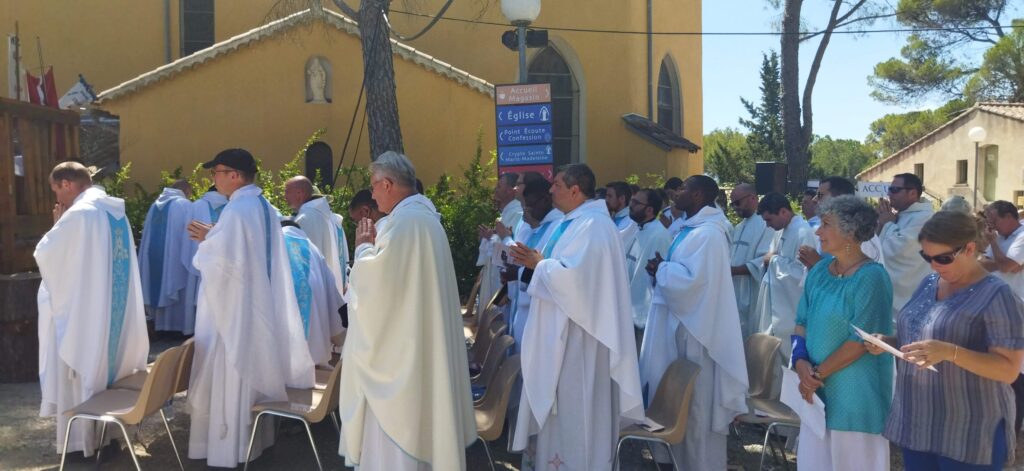
De nombreux pèlerins se sont réunis une nouvelle fois autour des sanctuaires de Cotignac pour honorer Saint Joseph durant tout le week-end des 18 et 19 mars.
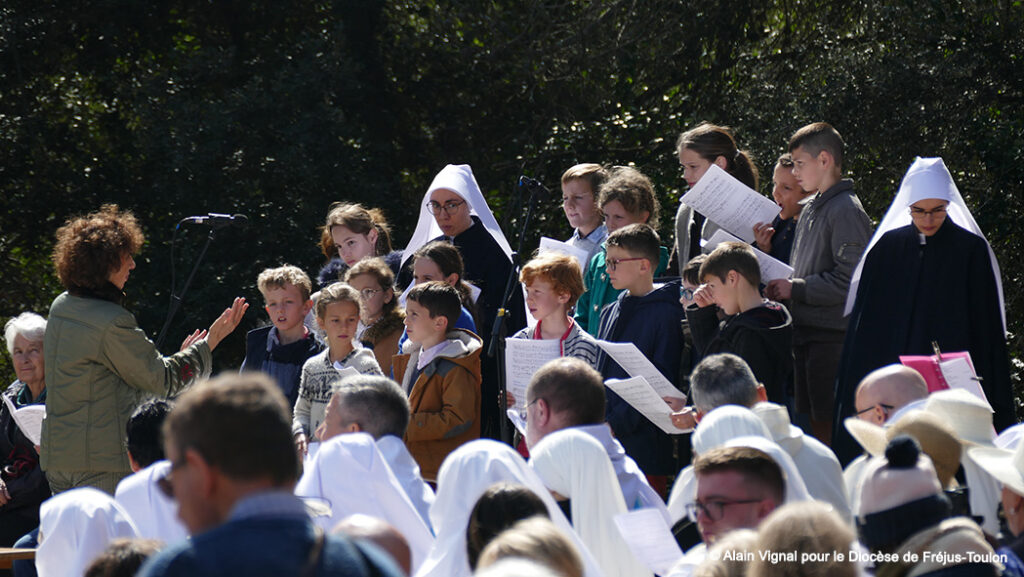
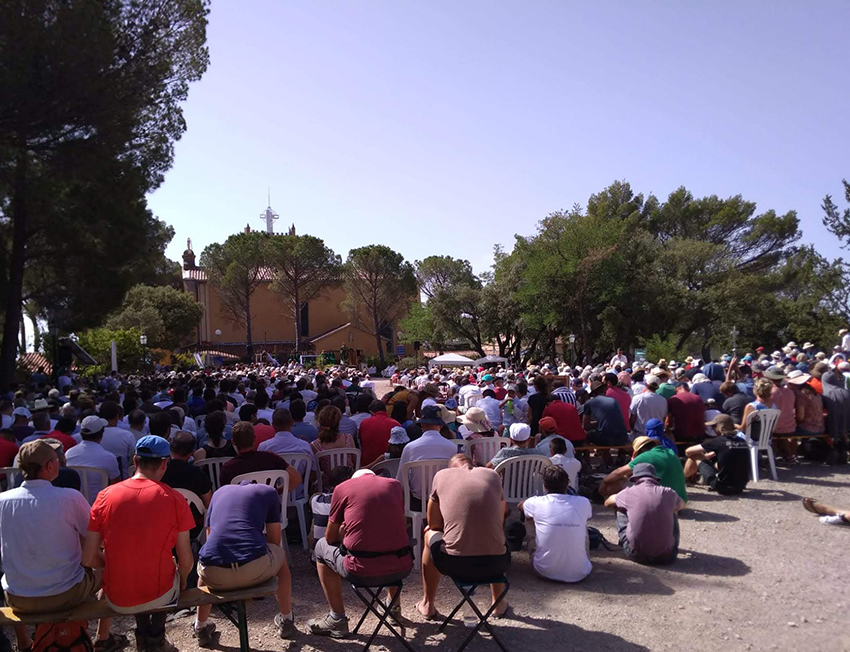
En point d’orgue de ces festivités, deux belles messes solennelles ont été célébrées en pleine nature sous le sanctuaire Saint Joseph du Bessillon samedi et dimanche. De nombreux autres rendez-vous tout au long du week-end se sont succédés, comme autant d’occasions de prière et de réflexion sous le regard de la Sainte Famille.
Samedi 18 mars : journée de pèlerinage diocésain
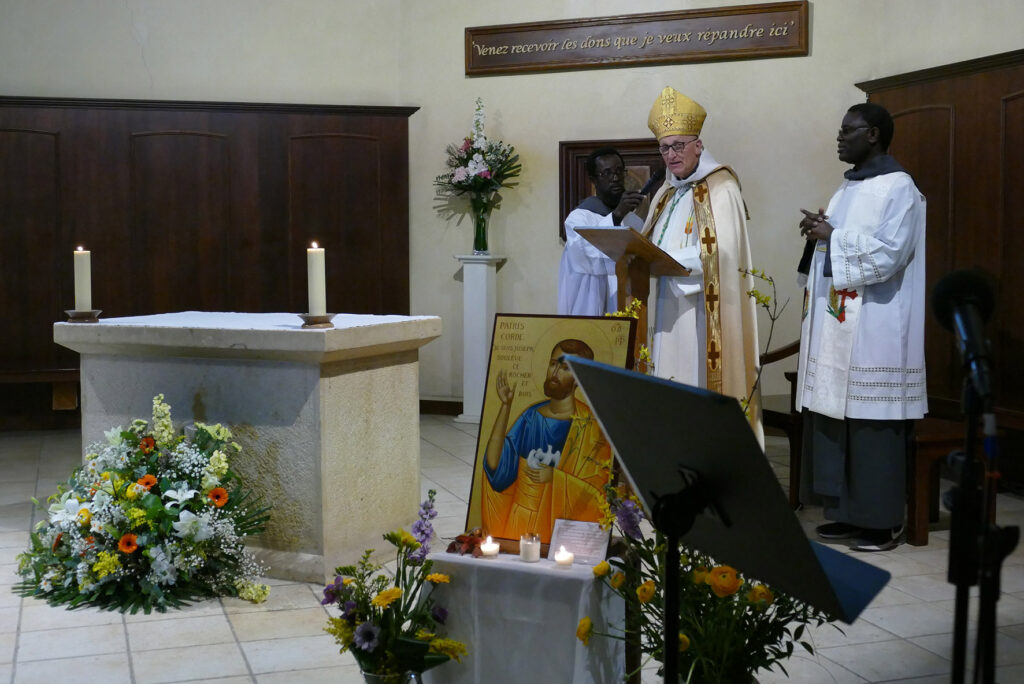
Sous un doux soleil, la journée a commencé par la messe solennelle présidée par Mgr Dominique Rey au Bessillon. En début d’après midi fr Louis-François a procédé à l’imposition du scapulaire de Saint Joseph pour les personnes qui s’y étaient préparées. Puis a eu lieu par Mgr Rey, la bénédiction du tableau de Nicolas Mignard offert par Mme Giscard d’Estaing au sanctuaire Notre-Dame de Grâces.
Une nombreuse assemblée a ensuite écouté la conférence de notre évêque sur “Les vertus de Saint Joseph” et la plupart des pèlerins a terminé cette belle journée en assistant aux vêpres et à l’adoration dans les deux sanctuaires.
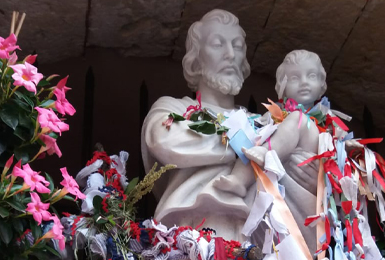
En fin de journée, une bonne centaine de courageux, a répondu à l’appel de la communauté de prière Hozana en venant rejoindre la veillée de prière proposée pour la clôture de la grande neuvaine : recueillement devant la statue de Saint Joseph où les nombreuses intentions de prières reçues durant la neuvaine ont pu être déposées (plus de 46000 intentions et 2500 lettres adressées à Saint Joseph !!!) et beau temps de louange à la bougie …

Dimanche 19 mars :
Le lendemain, la menace de pluie n’a pas découragé les pèlerins venus très nombreux au sanctuaire du Bessillon pour honorer Saint Joseph lors de la messe célébrée de nouveau par notre évêque, accompagné par le père Daniel Ange pour la prédication.
Les quelques gouttes de pluie ont vite laissé place à de belles éclaircies, y compris dans les cœurs de chacun à l’écoute de la conférence du père Daniel Ange au sanctuaire Notre-Dame de Grâces sur son dernier livre : “Les 8 voyages de Saint Joseph”.
Enfin, après une grande procession, la journée s’est terminée par les vêpres et l’adoration dans chacun des deux sanctuaires de Cotignac.